JD Beacon Rising in Nanjing: Ole Scheeren’s Octagonal Tech Tower Unveiled Ahead of Shanghai Debut
 Nov, 29 2025
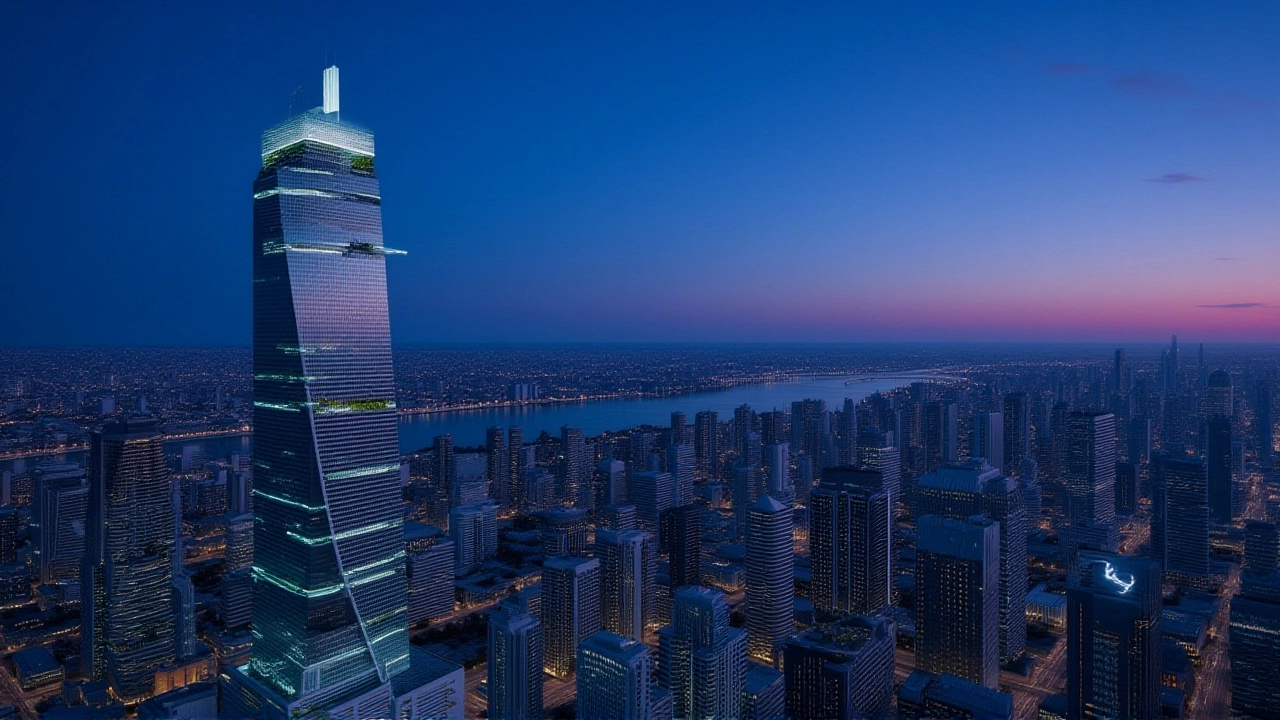
On September 24, 2024, the world’s architectural spotlight turns to Shanghai as Büro Ole Scheeren unveils three major projects at the World Design Cities Conference Shanghai—but the real buzz is about a tower rising in Nanjing. Dubbed JD Beacon, this octagonal super-tall tower isn’t just another office block. It’s the new regional headquarters and R&D hub for JD.com, China’s largest digital retailer, and it’s poised to redefine urban tech infrastructure in eastern China.
From Design Competition to Construction Reality
The story of JD Beacon begins not with a groundbreaking ceremony, but with a quiet win. On April 20, 2022, Büro Ole Scheeren was selected from an international field of 47 firms to design what was then known internally as ‘Nanjing Nexus.’ The brief? Create a landmark that blended innovation with cultural sensitivity—a tower that didn’t just house employees, but embodied the future of logistics-driven urban life. The octagonal form wasn’t just aesthetic; it’s structural, allowing for maximum natural light and wind resistance in Nanjing’s humid climate. Two years later, the design is finally seeing daylight, literally and figuratively.
Why now? The timing isn’t random. The firm’s September 24 presentation in Shanghai coincides with JD.com’s aggressive expansion of its physical footprint. Just months earlier, on July 9, 2024, Büro Ole Scheeren revealed the Scenic City project in Shenzhen—another JD.com headquarters, this one designed as a mixed-use campus. Both projects are part of a broader strategy: JD.com is moving beyond digital dominance to own the physical infrastructure of its supply chain. And they’re betting big on architecture as brand identity.
Two Towers, One Vision
Don’t confuse JD Beacon with Scenic City. They’re siblings, not twins. The Shenzhen project, recognized on October 1, 2024, at the World Architecture Festival China Shanghai, leans into green terraces and public plazas. JD Beacon in Nanjing? It’s vertical. It’s symbolic. At 380 meters, it’ll be one of the tallest buildings in the city, its octagonal silhouette echoing ancient Chinese pagodas while housing AI labs, robotics testing zones, and a 10,000-square-meter innovation center.
Architect Dan Cheong, who led the Nanjing design team, calls it “a beacon—not just for JD.com, but for the entire region’s tech ambitions.” Cheong, who also presented at the CTBUH 2024 China Conference in Qingdao in June, has become one of the firm’s most visible voices. He’ll be back in the spotlight on September 27, 2024, in Luzhou, presenting on winery architecture—a reminder that Büro Ole Scheeren’s vision extends far beyond corporate HQs.

Why This Matters Beyond Nanjing
China’s tech giants have long built data centers and warehouses. But HQs? Those were traditionally dull, glass-box affairs. JD.com is changing that. By investing in landmark architecture, they’re signaling that innovation isn’t just code—it’s environment. The JD Beacon isn’t just where engineers work; it’s where they’re inspired. The building’s design includes vertical gardens, sky bridges connecting towers, and a public observation deck on the 78th floor—open to residents, not just employees.
Experts say this trend is accelerating. “We’re seeing a new kind of corporate citizenship,” says Dr. Lin Wei, an urban planner at Tsinghua University. “Tech firms used to build in industrial parks. Now they’re anchoring urban renewal. JD Beacon isn’t just a tower—it’s a catalyst for transit upgrades, housing density, and even retail revival in the surrounding district.”
And it’s not just JD.com. Alibaba’s new Hangzhou campus, Tencent’s Shenzhen campus—all are following a similar playbook: architecture as culture. In Nanjing, a city known more for its history than its tech scene, JD Beacon could become the new symbol of its economic renaissance.

What Comes Next?
Construction on JD Beacon is expected to begin in early 2025, with completion targeted for late 2028. The firm has not yet released renderings of the interior, but insiders say the ground floor will feature a public innovation lab where local startups can prototype using JD’s logistics data. That’s not just good PR—it’s a strategic move to embed JD into the city’s DNA.
Meanwhile, Büro Ole Scheeren is already working on its next JD.com project: a logistics automation center in Chengdu, rumored to be shaped like a dragon’s spine. The firm’s founder, Ole Scheeren, who once led the design team at Rem Koolhaas’s OMA, has made a career out of turning corporate demands into cultural icons. From the Guardian Art Center in Beijing to JD Beacon in Nanjing, he’s proving that even the most utilitarian briefs can become poetry in concrete and steel.
Frequently Asked Questions
What is JD Beacon, and who is building it?
JD Beacon is a 380-meter octagonal super-tall tower in Nanjing, China, serving as the new regional headquarters and R&D center for JD.com. It was designed by Büro Ole Scheeren, the architectural firm led by Ole Scheeren, who won the international design competition in April 2022. The project is scheduled to begin construction in early 2025.
How is JD Beacon different from JD.com’s Shenzhen headquarters?
While both are JD.com headquarters designed by Büro Ole Scheeren, JD Beacon in Nanjing is a vertical, octagonal tower focused on R&D and tech innovation, reaching 380 meters. The Shenzhen project, called Scenic City, is a sprawling mixed-use campus with horizontal expansion, green terraces, and public plazas. Scenic City was recognized at the World Architecture Festival China in October 2024 for its urban integration, while JD Beacon emphasizes height, symbolism, and vertical community.
Why is this project getting attention now?
The timing coincides with Büro Ole Scheeren’s presentation of three key projects at the World Design Cities Conference in Shanghai on September 24, 2024. This high-profile event, combined with JD.com’s aggressive physical infrastructure expansion, has drawn media and industry focus. The firm’s recent recognition of the Shenzhen project and upcoming construction milestones have amplified interest in Nanjing as the next chapter.
Will the public be able to access JD Beacon?
Yes. Unlike traditional corporate towers, JD Beacon will include a public observation deck on the 78th floor and a ground-floor innovation lab open to local startups and students. This reflects JD.com’s strategy to turn its HQ into a civic asset, not just a workplace. The design team has stated that 15% of the building’s total floor area is dedicated to public or semi-public functions.
What role does architect Dan Cheong play in this project?
Dan Cheong, a senior architect at Büro Ole Scheeren, led the design team for JD Beacon and has been the public face of the project in interviews and panels. He also presented on the Shenzhen headquarters at the CTBUH 2024 China Conference and will speak on winery architecture in Luzhou on September 27, 2024. His work bridges corporate needs with cultural and environmental sensitivity, making him a key figure in the firm’s recent success.
How does this fit into China’s broader tech infrastructure trend?
China’s tech giants are shifting from utilitarian campuses to iconic architecture as symbols of innovation. Alibaba’s Hangzhou campus, Tencent’s Shenzhen HQ, and now JD.com’s dual towers in Nanjing and Shenzhen reflect a new norm: corporate identity expressed through landmark design. This isn’t vanity—it’s urban strategy. These buildings anchor transit networks, attract talent, and signal regional economic ambition, turning tech firms into city-shapers.